
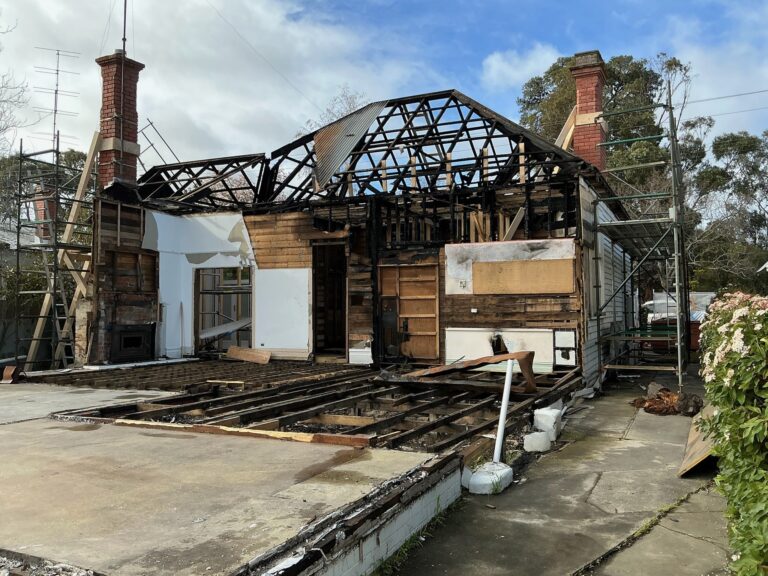
Insurance companies face growing pressure to settle property damage claims faster. Policyholders keep calling for updates. And internal teams want to prioritise cost control.
Delays in restoration increase temporary accommodation costs, create room for disputes, and quietly affect brand perception. Strategic partnerships with specialist insurance builders, such as ReconstructTM, offer a practical way to streamline workflows and reduce unnecessary friction.
This article outlines how insurers can reduce property damage claim cycle times through structured builder partnerships and more disciplined restoration processes.
Understanding the Factors That Delay Claim Cycle Times
It’s often assumed the holdup occurs at the approval stage, whether in underwriting, compliance, or final sign-off. But in reality, a lot of delays stem from the moment the builder steps on site.
Bringing in a general contractor who builds kitchens and bathrooms for a living is the first mistake. They speak a different language than what’s needed in a property restoration build. They do not understand why they need to document every layer of water damage for the audit trail. And when they hit a problem, say, hidden mould behind a wall, they stop work and wait. The insurers are then stuck in a loop of variation approvals, back-and-forth emails, and scope creep that no one planned for.
Insurance restoration is a niche. It comes with its own rulebook, timelines, and documentation standards. When those aren’t followed from day one, the cycle time stretches.
Why Specialised Insurance Builders Make a Difference
Insurance restoration operates within a distinct regulatory and procedural framework. Builders experienced in this space understand insurance scopes, policy inclusions, exclusions, and audit requirements as part of their daily workflow.
They don’t just look at the visible damage; they also look at the hidden stuff. They know that if there’s roof damage from a storm, there’s a high probability of water ingress that hasn’t presented itself yet. Insurance builders are more meticulous about each step. They document everything upfront because they know the assessor will need that evidence to approve the next stage.
When a builder can manage both the visible repairs and the unexpected complications without pausing the job every five days to ask for permission, the claim keeps moving. For insurers seeking to reduce property damage claim cycle inefficiencies, that foresight matters.
Partnering with Experienced Builders: The ReconstructTM Advantage
ReconstructTM is a licensed and certified insurance restoration builder operating across Queensland, delivering structured rebuild services following storm, flood, fire, and water damage events.
Experience across varied damage scenarios allows early identification of risks that often delay projects. Storm claims may involve structural movement. Flood events frequently conceal moisture within wall cavities or subfloors. Fire damage extends beyond visible charring to smoke contamination and odour remediation.
ReconstructTM’s dedicated teams coordinate directly with insurers throughout the project lifecycle. From assessment to final inspection, documentation and updates follow a structured, consistent process. This reduces unnecessary clarification cycles and supports faster approvals.
End-to-end accountability further limits disruption. When assessment, restoration, compliance checks, and handover are managed within one framework, the likelihood of inter-stage delays decreases significantly.
For insurers evaluating restoration partners, consistency and predictability often outweigh ad hoc flexibility.
Streamlining Communication and Approval Workflows
Communication inefficiencies are rarely dramatic. But they are incremental.
Clear, well-defined channels among the insurer, builder, and policyholder reduce the need for clarification requests. Comprehensive scoping at the outset creates smoother approval pathways later.
ReconstructTM follows a structured update model, including scheduled progress reports and systematic documentation submission aligned with insurer requirements. When additional damage arises, the team proactively engages rather than allowing uncertainty to delay work.
Early builder involvement during scope development can be particularly effective. While it may appear to extend initial assessment timelines slightly, it often prevents significant mid-project revisions.
Efficiency is less about speed at every stage and more about reducing interruptions across the entire claim lifecycle.
Reducing Variations and Managing Unexpected Damage
Unexpected damage is inherent in restoration work. There are some issues, like hidden water ingress, that only become apparent once demolition begins. But every time the builder finds something new, it triggers a mini approval process.
If the builder isn’t experienced, they might handle that informally. A phone call here, an email there. Then the paperwork doesn’t match the site’s reality, and the claim is suddenly flagged for audit issues.
Specialist builders know how to handle variations cleanly. They document the new damage, explain why it’s relevant to the original incident, and submit it in a way that adjusters can approve quickly.
Variations will always happen. But the goal is to process them without stopping the entire job.
Measuring Success: KPIs for Strategic Builder Partnerships
Strategic partnerships should be evaluated against clear performance indicators. The metrics go beyond “Did we finish on time?” Look at the average cycle time from lodgement to completion across different builder partners. Compare the number of scope revisions with specialist builders versus general contractors.
Policyholder satisfaction is another one. When the repair process is smooth, the customer stops calling you with questions. They deal directly with the builder, who keeps them updated. That drop in complaints frees up the team to handle new claims rather than babysitting old ones.
And then there’s cost. It’s easy to look at a specialist builder’s quote and think it’s higher than average. But when you factor in the reduced variation requests, the faster turnaround, and the lower administrative drag, the total cost of the claim often ends up lower. You’re paying for predictability.
Building a Long-Term Restoration Network
The other advantage of building relationships with insurance builders like ReconstructTM is scalability. When a major storm hits Queensland, and every policyholder in a postcode files a claim at once, you don’t want to be scrambling to find builders who are available and competent. If you’ve already got a pre-vetted network with multi-location coverage, you can respond immediately without sacrificing quality.
That consistency also matters for brand reputation. If every claim is handled to the same standard, whether it’s in Brisbane or Cairns, your brand stays protected. Policyholders don’t care about your internal workflows; they just want their home fixed. When that happens smoothly, they remember.
Conclusion
The pressure insurers face to reduce property damage claim cycle times is more than just doing faster paperwork. It requires having the right people on the ground who understand that every day a project sits idle is another day the customer loses trust.
Specialist insurance builders bring a level of precision and process awareness that general contractors don’t have. And in an environment where efficiency and reputation are tightly linked, that kind of partnership is critical.
Contact ReconstructTM to discuss your next restoration project.
If your organisation is seeking to improve claim cycle efficiency, ReconstructTM offers structured, insurance-aligned restoration services across Queensland. Engage with our team to discuss how we can support faster resolutions and stronger policyholder outcomes.
Call 1300 402 528 to speak to us today.
